 InQ.IFBA Portal da Inovação & Qualidade

by Natan Oliveira
Jonas Souza
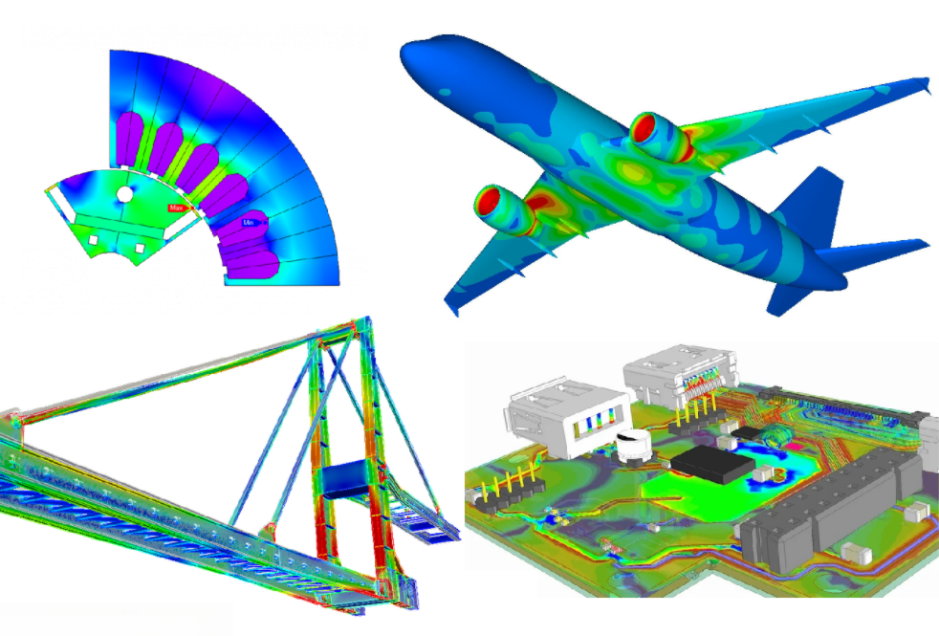
Source: Software Finite Element Analysis
The Finite Element Method (FEM) stands out as one of the most revolutionary tools in modern engineering, transforming the way complex problems are solved. Based on the discretization of continuous media into small elements, the method enables approximate solutions to be obtained with efficiency and precision, something that would be unfeasible using traditional analytical methods. Its applicability and implementation took place in the late 18th century, with the advent of computing, which facilitated the large number of calculations required by the method.
The application of the method is extremely diverse across all areas of science, especially in engineering. In the field of Civil Engineering, it is applied in its main areas such as Geotechnical, Hydraulic, and primarily in Structural Engineering, where the method is used to determine the state of stress and deformation of a solid with arbitrary geometry subjected to external forces. This type of calculation is known as structural analysis and is used, for example, in the study of buildings, bridges, dams, among others. When designing a structure, it is common to perform a series of analyses and adjustments to its characteristics to achieve a solution that is satisfactory both economically and in terms of meeting functional and regulatory requirements.
FEM also has significant applications in electrical and electronics engineering, especially in areas such as electromagnetism, thermal analysis, and embedded systems. In Electrical Engineering, it is used to analyze electromagnetic fields in devices like motors, transformers, and antennas, allowing for the prediction of the behavior of complex systems and the optimization of their performance. In thermal analysis, FEM assists in the study of heat dissipation in electronic components, ensuring greater efficiency and reliability.
In embedded systems, FEM is employed to simulate extreme operating conditions, such as thermal variations and mechanical vibrations. This allows for the prediction of failures and enhances the robustness of miniaturized electronic devices. Moreover, integration with artificial intelligence has enabled the automation of analysis and project optimization processes, reducing development time and increasing the accuracy of results.
The advancement of FEM is directly related to the development of high-performance computing (HPC) and algorithms based on artificial intelligence. These technologies expand the capacity for analysis and make it possible to solve more complex problems.
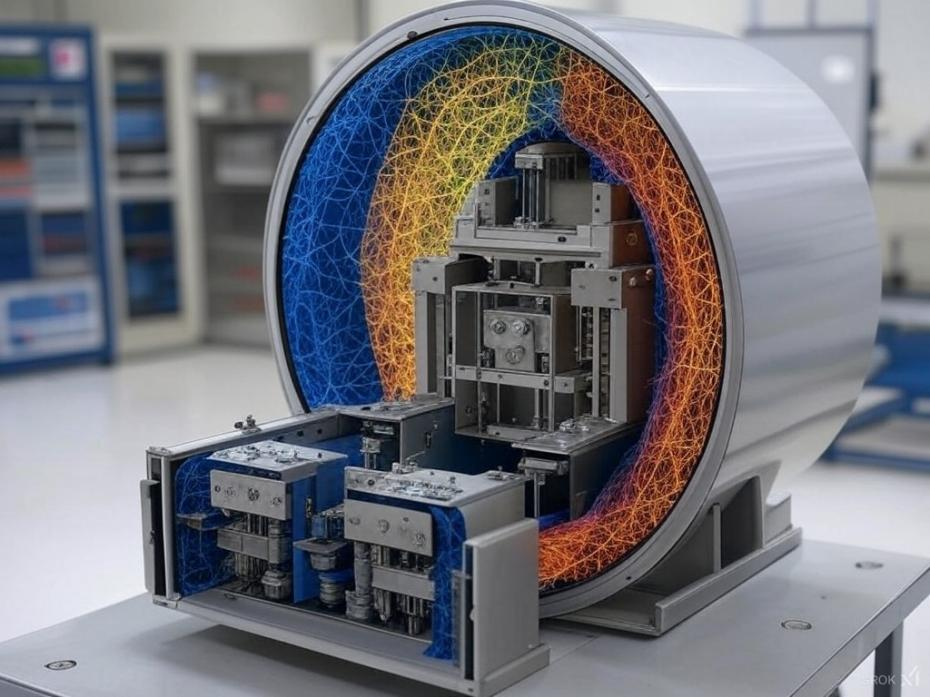
Source: Generated by AI
With the evolution of software and the popularization of the Finite Element Method (FEM), an important reflection arises: to what extent is it necessary for engineers to master the complex mathematical formulations behind the methodology when, in practice, many rely on intuitive graphical interfaces and the interpretation of results?
However, there is a fundamental reason to continue teaching the theoretical foundations of FEM—to prepare the innovators of tomorrow. The tools related to FEM are increasingly linked to the world of computing, which is evolving rapidly. This means that, in the future, it will be necessary to adapt structural analysis techniques to new computing platforms. If the current knowledge base remains restricted to a small number of people, it will be difficult to find researchers in the future capable of driving the scientific advancement of the field.
Did you enjoy the content? Today we began publishing joint articles, thereby promoting science and making it even more widespread. For more information, check out the book Método dos Elementos Finitos by Álvaro F. M. Azevedo from the Faculty of Engineering at the Faculty of Porto, as well as the dissertation Os elementos finitos no estudo de eletromagnetismo utilizando os Software Gmsh/GetDPOs by Juliana Amâncio Malagoni, defended at the Federal University of Uberlândia. Be sure not to miss our exclusive weekly articles, which will certainly help you in many ways. Also, visit our Instagram @inqportal and, if you’d like to send us any suggestions, here is our email: inq.vdc@ifba.edu.br


